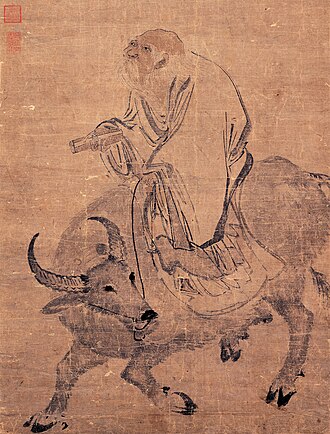
Fun Facts About Lao Tzu
- Lao Tzu, according to Taoist myth, remained in his mother's womb for 62 years and was born while she was leaning against a plum tree.[1]
- Laozi is not a personal name but an honorific title meaning old teacher or venerable master; traditional accounts give his personal name as Li Er.[1]
- In one tale, a gate guard would let Laozi pass only if he recorded his wisdom, and the text he wrote was said to be the Tao Te Ching.[1]
- Because of his traditional name Li Er, the emperors of the Tang dynasty traced their descent to Laozi.[1]
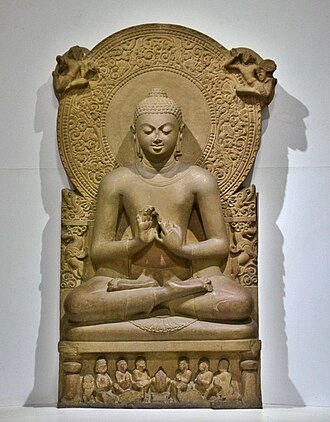
- Some later legends claim Laozi journeyed to India and taught the Buddha, and others say he was the Buddha himself.[1]
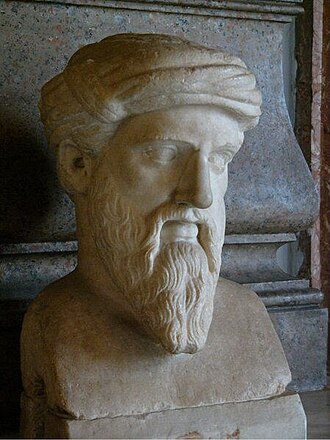
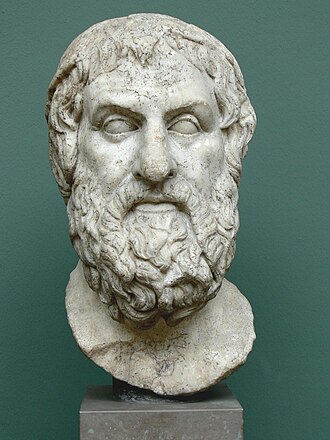
- Lao Tzu was alive at the same time as Sophocles — their lives overlapped for about 25 years (c. 496 BCE–c. 471 BCE).[1][2][3][4]
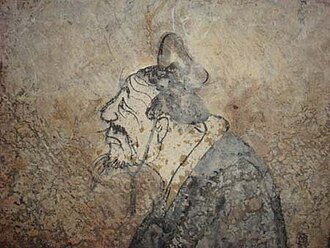
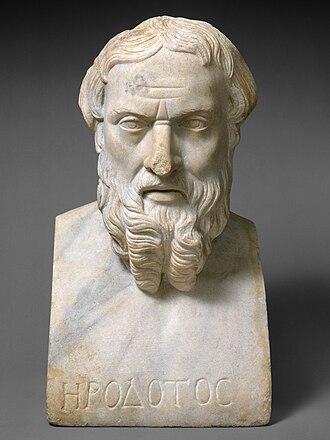
- Lao Tzu was alive at the same time as Herodotus — their lives overlapped for about 13 years (c. 484 BCE–c. 471 BCE).[1][2][5][6]
Laozi, formerly latinized as Laocius, was a legendary Chinese philosopher considered to be the author of the Tao Te Ching, one of the foundational texts of Taoism. Modern scholarship generally regards his biographical details as later inventions and his opus a collaboration of various writers, with the name Laozi, literally meaning 'Old Master', likely intended to portray an archaic anonymity that could converse with Confucianism. Traditional accounts addend him as Li Er, born in the 6th-century BC state of Chu during China's Spring and Autumn period. Serving as the royal archivist for the Zhou court at Wangcheng, he met and impressed Confucius on one occasion, composing the Dào Dé Jīng in a single session before retiring into the western wilderness.[1]
Read more on Wikipedia →Contemporaries
Questions About Lao Tzu
When was Lao Tzu born?
Lao Tzu was born about 571 BCE and died about 471 BCE. The exact dates are not known.
What was Lao Tzu known for?
Lao Tzu was known for: Founder of Taoism, author of Tao Te Ching. Laozi, formerly latinized as Laocius, was a legendary Chinese philosopher considered to be the author of the Tao Te Ching, one of the foundational texts of Taoism. Modern scholarship generally regards his biographical details as later inventions and his opus a collaboration of various writers, with the name Laozi, literally meaning 'Old Master', likely intended to portray an archaic anonymity that could converse with Confucianism. Traditional accounts addend him as Li Er, born in the 6th-century BC state of Chu during China's Spring and Autumn period. Serving as the royal archivist for the Zhou court at Wangcheng, he met and impressed Confucius on one occasion, composing the Dào Dé Jīng in a single session before retiring into the western wilderness.
Who was alive at the same time as Lao Tzu?
Lao Tzu's closest contemporary was Gautama Buddha. Their lives overlapped for 80 years.
Sources
- Laozi — Wikipedia. Text available under CC BY-SA 4.0
- Lao Tzu (Q9333) — Wikidata
- Sophocles — Wikipedia
- Sophocles (Q7235) — Wikidata
- Herodotus — Wikipedia
- Herodotus (Q26825) — Wikidata
- Portrait: Zhang Lu-Laozi Riding an Ox (cropped).jpg — Wikimedia Commons. Zhang Lu, Public domain