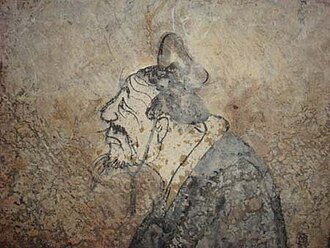
Fun Facts About Confucius
- Confucius's family has the longest recorded pedigree in the world. The father-to-son family tree is now in its 83rd generation, with two million registered descendants.[1]
- The name "Confucius" is a Latinized form of the Chinese Kongfuzi (roughly "Great Master Kong") that Jesuit missionaries coined in the late 16th century.[1]
- Confucius charged no tuition. He asked prospective students only for a symbolic gift of a bundle of dried meat.[1]
- Before he began teaching at 30, Confucius is said to have worked as a bookkeeper and a caretaker of sheep and horses.[1]
- According to the ancient history Shiji, the neighboring state of Qi sabotaged Confucius's reforms in Lu by sending its duke 100 good horses and 80 dancing girls.[1]
- A 54th-generation descendant of Confucius moved to Korea in 1351, and about 34,000 of his descendants live there today. Famous descendants include the actor Gong Yoo.[1]
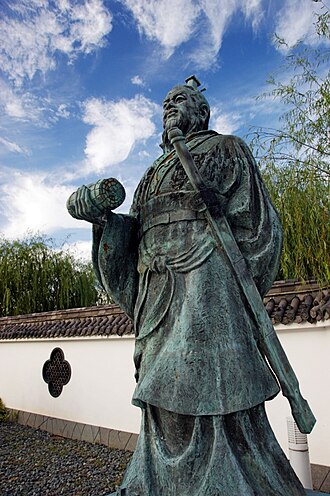
- By tradition, Confucius and Sun Tzu lived at the same time in ancient China.[1][2][3][4]
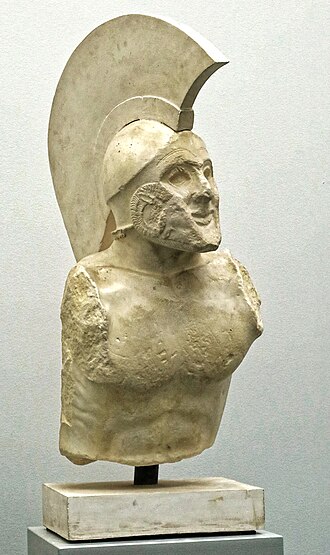
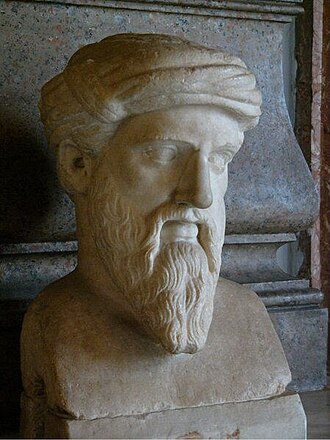
- Confucius was alive at the same time as Pythagoras — their lives overlapped for about 56 years (c. 551 BCE–c. 495 BCE).[1][2][5][6]
Confucius, born Kong Qiu, was a Chinese philosopher of the Spring and Autumn period who is traditionally considered the paragon of Chinese sages. Much of the shared cultural heritage of the Sinosphere originates in the philosophy and teachings of Confucius. His philosophical teachings, called Confucianism, emphasized personal and governmental morality, harmonious social relationships, righteousness, kindness, sincerity, and a ruler's responsibilities to lead by virtue.[1]
Read more on Wikipedia →Contemporaries
Questions About Confucius
When was Confucius born?
Confucius was born about 551 BCE and died about 479 BCE. The exact dates are not known.
What was Confucius known for?
Confucius was known for: Founder of Confucianism. Confucius, born Kong Qiu, was a Chinese philosopher of the Spring and Autumn period who is traditionally considered the paragon of Chinese sages. Much of the shared cultural heritage of the Sinosphere originates in the philosophy and teachings of Confucius. His philosophical teachings, called Confucianism, emphasized personal and governmental morality, harmonious social relationships, righteousness, kindness, sincerity, and a ruler's responsibilities to lead by virtue.
Who was alive at the same time as Confucius?
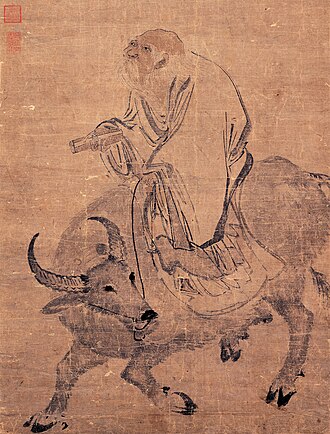
Confucius's closest contemporary was Lao Tzu. Their lives overlapped for 72 years.
Sources
- Confucius — Wikipedia. Text available under CC BY-SA 4.0
- Confucius (Q4604) — Wikidata
- Sun Tzu — Wikipedia
- Sun Tzu (Q37151) — Wikidata
- Pythagoras — Wikipedia
- Pythagoras (Q10261) — Wikidata
- Portrait: Confucius, fresco from a Western Han tomb of Dongping County, Shandong province, China.jpg — Wikimedia Commons. Anonymous Chinese painter of the Western Han period, Public domain