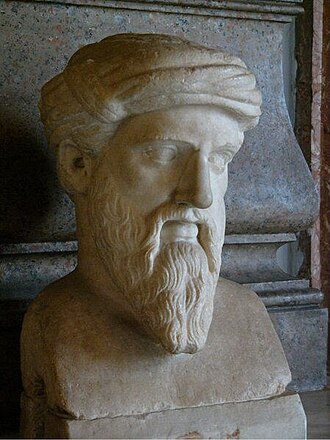
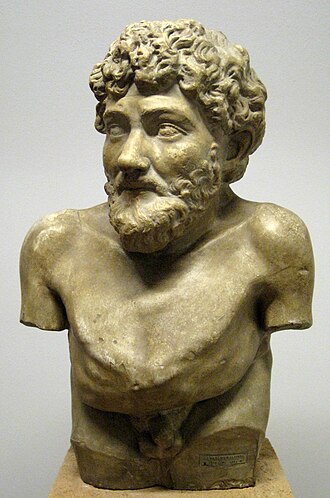
Photo: The original uploader was Galilea at German Wikipedia., CC BY-SA 3.0
Pythagoras
Fun Facts About Pythagoras
- Pythagoras may not have discovered the Pythagorean theorem. Historians dispute his math credits, and the theorem's principles appear in earlier Babylonian mathematics such as the Plimpton 322 tablet.[1]
- According to a fragment by Aristotle, Pythagoras had a golden thigh, which he publicly showed at the Olympic Games.[1][3][4]
- Ancient legends claimed that when a deadly snake bit Pythagoras, he bit it back and killed it, and that he persuaded a destructive bear to swear never to harm a living thing again.[1]
- Pythagoras reportedly claimed to remember four previous lives, including one as Euphorbus, a minor hero of the Trojan War.[1]
- Sayings attributed to Pythagoras forbade his followers from breaking bread and taught that a person should always put the right sandal on before the left.[1]
- Members who broke the rules of Pythagoras's community were expelled, and the remaining members erected tombstones for them as though they had died.[1]
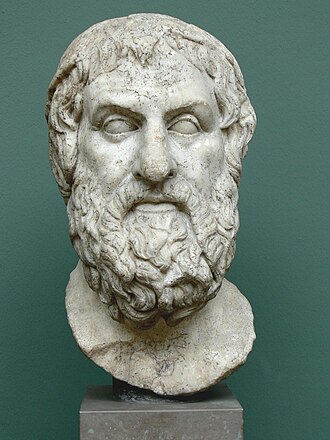
- Pythagoras was alive at the same time as Sophocles — their lives overlapped for about 1 year (c. 496 BCE–c. 495 BCE).[1][2][5][6]
Pythagoras of Samos was an ancient Ionian Greek philosopher, polymath, and the eponymous founder of Pythagoreanism. His political and religious teachings were well known in Magna Graecia and influenced the philosophies of Plato, Aristotle, and, through them, Western philosophy. Modern scholars disagree regarding Pythagoras's education and influences, but most agree that he travelled to Croton in southern Italy around 530 BC, where he founded a school in which initiates were allegedly sworn to secrecy and lived a communal, ascetic lifestyle.[1]
Read more on Wikipedia →Contemporaries



Questions About Pythagoras
When was Pythagoras born?
Pythagoras was born about 570 BCE and died about 495 BCE. The exact dates are not known.
What was Pythagoras known for?
Pythagoras was known for: Pythagorean theorem, early mathematician. Pythagoras of Samos was an ancient Ionian Greek philosopher, polymath, and the eponymous founder of Pythagoreanism. His political and religious teachings were well known in Magna Graecia and influenced the philosophies of Plato, Aristotle, and, through them, Western philosophy. Modern scholars disagree regarding Pythagoras's education and influences, but most agree that he travelled to Croton in southern Italy around 530 BC, where he founded a school in which initiates were allegedly sworn to secrecy and lived a communal, ascetic lifestyle.
Who was alive at the same time as Pythagoras?
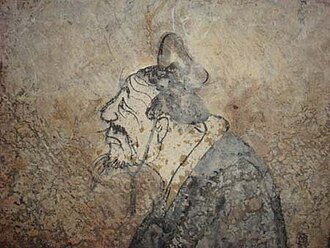
Pythagoras's closest contemporary was Lao Tzu. Their lives overlapped for 75 years.
Sources
- Pythagoras — Wikipedia. Text available under CC BY-SA 4.0
- Pythagoras (Q10261) — Wikidata
- Aristotle — Wikipedia
- Aristotle (Q868) — Wikidata
- Sophocles — Wikipedia
- Sophocles (Q7235) — Wikidata
- Portrait: Kapitolinischer Pythagoras.jpg — Wikimedia Commons. The original uploader was Galilea at German Wikipedia., CC BY-SA 3.0