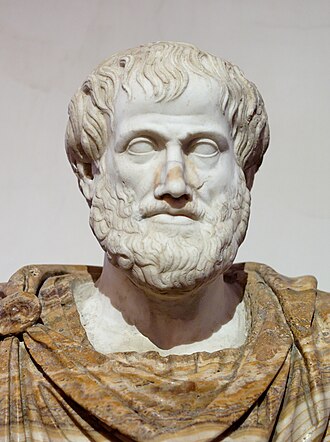
Fun Facts About Aristotle
- Aristotle fled Athens in 322 BC after being denounced for impiety, reportedly saying "I will not allow the Athenians to sin twice against philosophy," a reference to the execution of Socrates.[1][3][4]
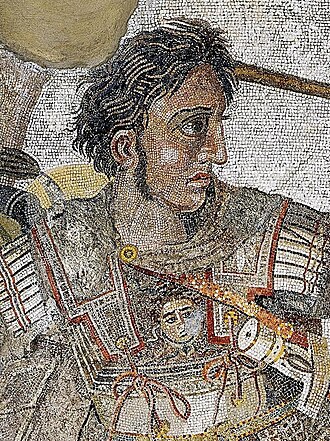
- Aristotle tutored Philip II of Macedon's 13-year-old son Alexander and gave him an annotated copy of the Iliad, said to have become one of Alexander's most prized possessions.[1][5][6]
- Aristotle's school was called Peripatetic after the colonnade, or peripatos, of the Lyceum building, which he rented because as a metic he could not own property in Athens.[1]
- Aristotle was the first person known to suggest that a landmass existed in the far southern latitudes, which he called Antarctica.[1]
- Aristotle described the special arm that octopuses and other cephalopods use to reproduce. His description was widely disbelieved until the 19th century.[1]
- At Plato's Academy, the young Aristotle earned the nickname "mind of the school" from his teacher Plato.[1][7][8]
- Aristotle was Alexander the Great's personal tutor.[1][2][5][6]
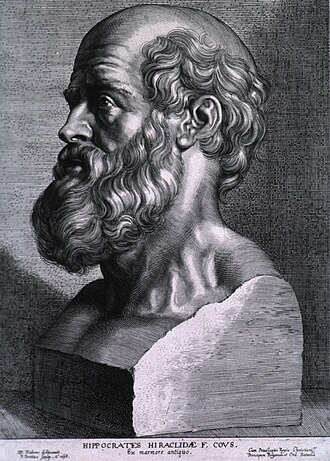
- Aristotle was alive at the same time as Hippocrates — their lives overlapped for about 14 years (384 BCE–c. 370 BCE).[1][2][9][10]
Aristotle was an ancient Greek philosopher and polymath. His writings cover a broad range of subjects spanning the natural sciences, philosophy, linguistics, economics, politics, psychology, and the arts. As the founder of the Peripatetic school of philosophy in the Lyceum in Athens, he began the wider Aristotelian tradition that followed, which set the groundwork for the development of modern science.[1]
Read more on Wikipedia →Contemporaries
Questions About Aristotle
When was Aristotle born?
Aristotle was born in 384 BCE and died in 322 BCE.
How old was Aristotle at death?
Aristotle died in 322 BCE at about 62 years old (384 BCE–322 BCE).
What was Aristotle known for?
Aristotle was known for: Founder of formal logic, tutor of Alexander the Great. Aristotle was an ancient Greek philosopher and polymath. His writings cover a broad range of subjects spanning the natural sciences, philosophy, linguistics, economics, politics, psychology, and the arts. As the founder of the Peripatetic school of philosophy in the Lyceum in Athens, he began the wider Aristotelian tradition that followed, which set the groundwork for the development of modern science.
Who was alive at the same time as Aristotle?
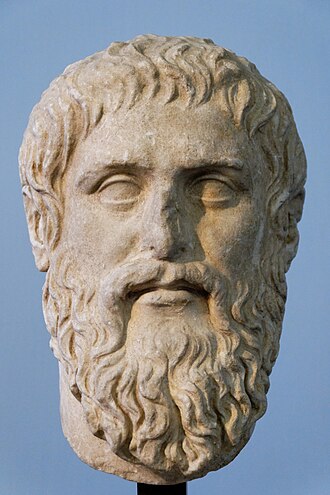
Aristotle's closest contemporary was Plato. Their lives overlapped for 36 years.
Sources
- Aristotle — Wikipedia. Text available under CC BY-SA 4.0
- Aristotle (Q868) — Wikidata
- Socrates — Wikipedia
- Socrates (Q913) — Wikidata
- Alexander the Great — Wikipedia
- Alexander the Great (Q8409) — Wikidata
- Plato — Wikipedia
- Plato (Q859) — Wikidata
- Hippocrates — Wikipedia
- Hippocrates (Q5264) — Wikidata
- Portrait: Aristotle Altemps Inv8575.jpg — Wikimedia Commons. After Lysippos, Public domain