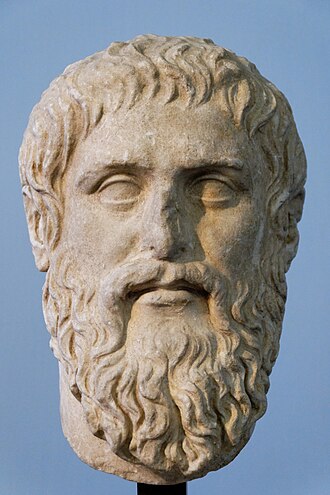
Fun Facts About Plato
- Plato may once have been sold into slavery. A scroll from Herculaneum, whose decipherment was announced in 2024, says he was sold as a slave on the island of Aegina.[1]
- An ancient biographer claimed "Plato" was a nickname for his robust build and that his real name was Aristocles, but modern scholars widely regard this as false.[1]
- According to an ancient tradition, the young Plato wrote poems and tragedies, then burned them when he met Socrates and turned to philosophy.[1][3][4]
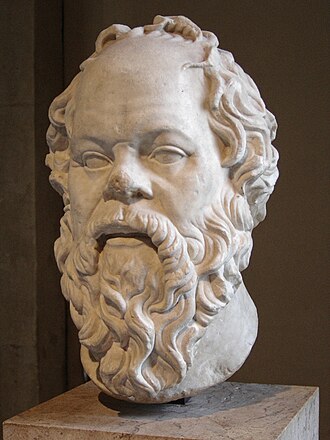
- Plato never speaks in his own voice in his dialogues, and every one of them except the Laws features his teacher Socrates.[1][3][4]
- A lost comedy by Epicrates mocked Plato's students by showing two of them in a fierce debate over the genus of a pumpkin.[1]
- According to the Herculaneum scroll, Plato spent his last evening feverish, listening to a flute player and complaining about her lack of rhythm.[1]
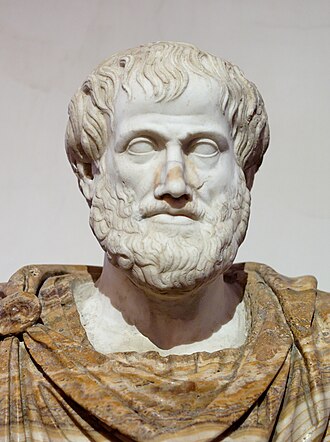
- Aristotle studied at Plato's Academy for 20 years.[1][2][5][6]
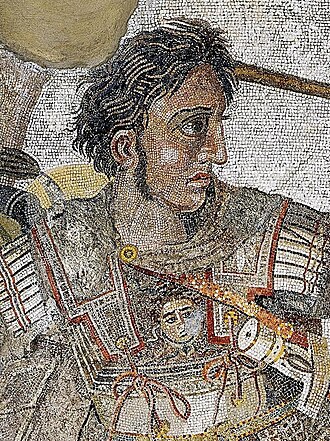
- Plato was alive at the same time as Alexander the Great — their lives overlapped for about 8 years (356 BCE–c. 348 BCE).[1][2][7][8]
Plato was an ancient Greek philosopher of Classical Athens who is most commonly considered the foundational thinker of the Western philosophical tradition. An innovator of the literary dialogue and dialectic forms, Plato influenced all the major areas of theoretical philosophy and practical philosophy, and was the founder of the Academy, a philosophical school in Athens where Plato taught the collection of philosophical theories that would later become known as Platonism.[1]
Read more on Wikipedia →Contemporaries
Questions About Plato
When was Plato born?
Plato was born about 428 BCE and died about 348 BCE. The exact dates are not known.
What was Plato known for?
Plato was known for: Founder of the Academy in Athens. Plato was an ancient Greek philosopher of Classical Athens who is most commonly considered the foundational thinker of the Western philosophical tradition. An innovator of the literary dialogue and dialectic forms, Plato influenced all the major areas of theoretical philosophy and practical philosophy, and was the founder of the Academy, a philosophical school in Athens where Plato taught the collection of philosophical theories that would later become known as Platonism.
Who was alive at the same time as Plato?
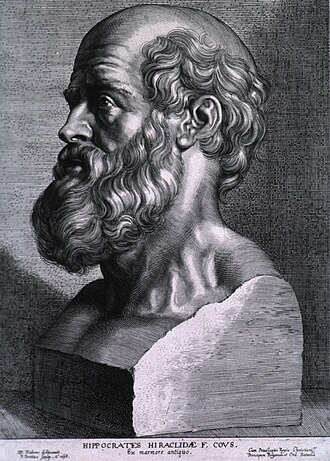
Plato's closest contemporary was Hippocrates. Their lives overlapped for 58 years.
Sources
- Plato — Wikipedia. Text available under CC BY-SA 4.0
- Plato (Q859) — Wikidata
- Socrates — Wikipedia
- Socrates (Q913) — Wikidata
- Aristotle — Wikipedia
- Aristotle (Q868) — Wikidata
- Alexander the Great — Wikipedia
- Alexander the Great (Q8409) — Wikidata
- Portrait: Plato Silanion Musei Capitolini MC1377.jpg — Wikimedia Commons. © Marie-Lan Nguyen / Wikimedia Commons, CC BY 2.5