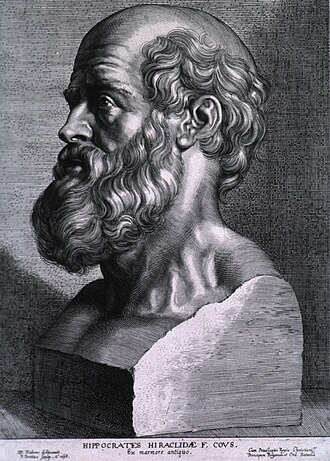
Fun Facts About Hippocrates
- Hippocrates probably never said "Let food be your medicine, and medicine be your food". The famous line appears to be a misquotation of unknown origin.[1]
- The Hippocratic Oath may have been written after Hippocrates died, and the Hippocratic Corpus could not have been written by one person; one scholar counts nineteen authors.[1]
- Hippocrates treated fevers by starving his patients, so he may have been the originator of the idea "Feed a cold, starve a fever".[1]
- Hippocrates is said to have measured a patient's pulse while taking a case history to discover whether the patient was lying.[1]
- Clubbed fingers are sometimes called "Hippocratic fingers", and Shakespeare alluded to Hippocrates's description of the dying "Hippocratic face" in Henry V.[1][3][4]
- The Travels of Sir John Mandeville tells a legend that Hippocrates's daughter was turned into a hundred-foot dragon by the goddess Diana.[1]
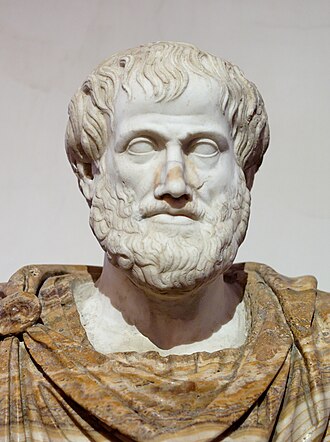
- Hippocrates was alive at the same time as Aristotle — their lives overlapped for about 14 years (384 BCE–c. 370 BCE).[1][2][5][6]
Hippocrates of Kos, also known as Hippocrates II, named after his grandfather Hippocrates I was a Greek physician and philosopher of the classical period who is considered one of the most outstanding figures in the history of medicine. He is traditionally referred to as the "Father of Medicine" in recognition of his lasting contributions to the field, such as the use of prognosis and clinical observation, the systematic categorization of diseases, and the formulation of humoral theory. His studies set out the basic ideas of modern-day specialties, including surgery, urology, neurology, acute medicine and orthopedics, and advanced the systematic study of clinical medicine.[1]
Read more on Wikipedia →Contemporaries
Questions About Hippocrates
When was Hippocrates born?
Hippocrates was born about 460 BCE and died about 370 BCE. The exact dates are not known.
What was Hippocrates known for?
Hippocrates was known for: Father of medicine, Hippocratic Oath. Hippocrates of Kos, also known as Hippocrates II, named after his grandfather Hippocrates I was a Greek physician and philosopher of the classical period who is considered one of the most outstanding figures in the history of medicine. He is traditionally referred to as the "Father of Medicine" in recognition of his lasting contributions to the field, such as the use of prognosis and clinical observation, the systematic categorization of diseases, and the formulation of humoral theory. His studies set out the basic ideas of modern-day specialties, including surgery, urology, neurology, acute medicine and orthopedics, and advanced the systematic study of clinical medicine.
Who was alive at the same time as Hippocrates?
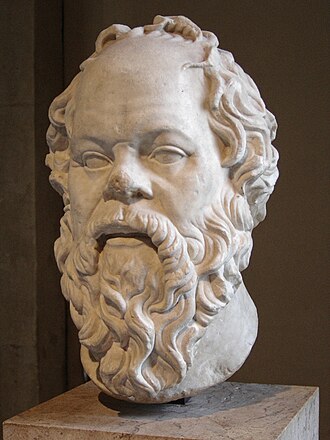
Hippocrates's closest contemporary was Socrates. Their lives overlapped for 61 years.
Sources
- Hippocrates — Wikipedia. Text available under CC BY-SA 4.0
- Hippocrates (Q5264) — Wikidata
- William Shakespeare — Wikipedia
- William Shakespeare (Q692) — Wikidata
- Aristotle — Wikipedia
- Aristotle (Q868) — Wikidata
- Portrait: Hippocrates rubens.jpg — Wikimedia Commons. Paulus Pontius / After Peter Paul Rubens, Public domain