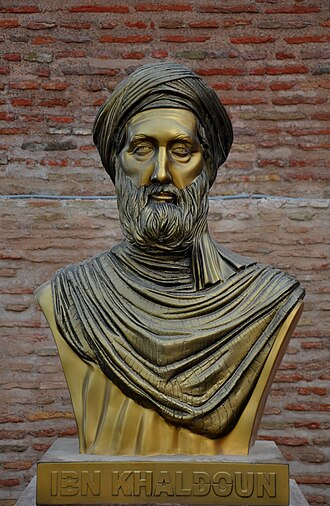
Fun Facts About Ibn Khaldun
- Ibn Khaldun was lowered over the walls of besieged Damascus by ropes to negotiate with the conqueror Timur, who questioned him in detail about the Maghreb.[1][3][4]
- Ibn Khaldun wrote his famous Muqaddimah in six months, as he states in his autobiography, while living under the protection of a Berber tribe in western Algeria.[1]
- In 1981, US President Ronald Reagan cited Ibn Khaldun as an influence on his supply-side economic policies, paraphrasing his remarks on tax revenues.[1][5][6]
- At 25, Ibn Khaldun was given a 22-month prison sentence for scheming against his employer, the Marinid sultan of Fez.[1]
- On a diplomatic mission to King Pedro the Cruel of Castile, Ibn Khaldun politely declined Pedro's offer to stay at his court and get back his family's Spanish possessions.[1]
- In Cairo, Ibn Khaldun was called six times to the high office of chief Maliki judge, but for various reasons never held it for long.[1]
- Ibn Khaldun was alive at the same time as Johannes Gutenberg — their lives overlapped for about 6 years (c. 1400–1406).[1][2][7][8]
- Ibn Khaldun lived to about 74, from 1332 until 1406.[1][2]
Ibn Khaldūn was an Arab Tunisian scholar, historian, philosopher, and sociologist. He is widely acknowledged to be one of the greatest social scientists of the Middle Ages, and is considered by a number of scholars to be a major forerunner of historiography, sociology, economics, and demography studies.[1]
Read more on Wikipedia →Contemporaries
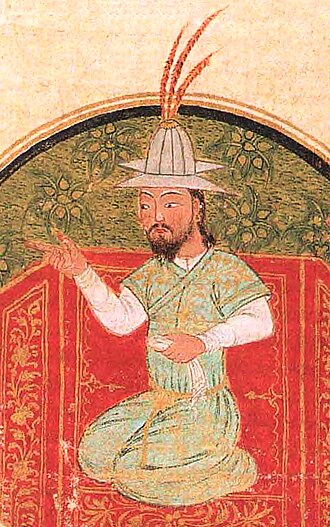
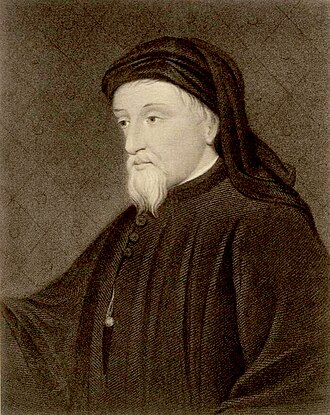
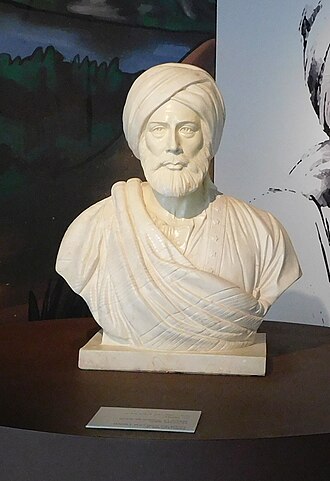
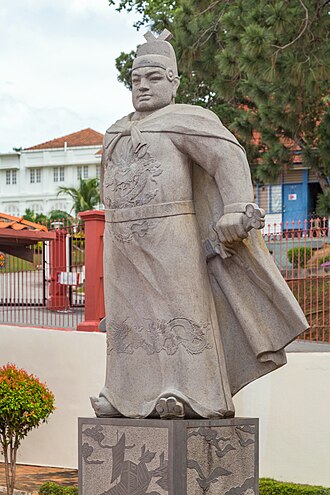
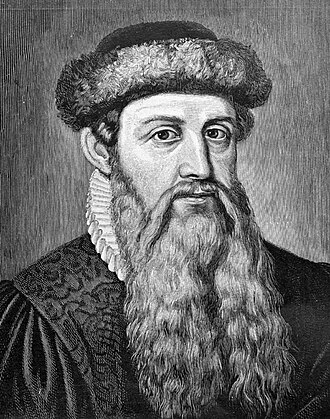
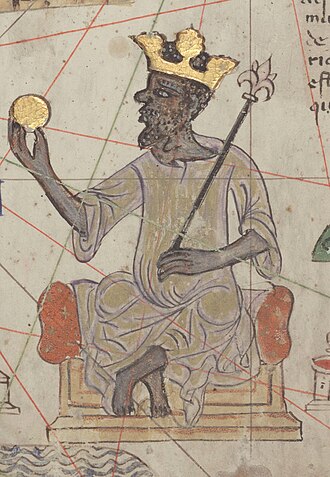
Their World
Questions About Ibn Khaldun
When was Ibn Khaldun born?
Ibn Khaldun was born in 1332 and died in 1406.
How old was Ibn Khaldun at death?
Ibn Khaldun died in 1406 at about 74 years old (1332–1406).
What was Ibn Khaldun known for?
Ibn Khaldun was known for: Historian and author of the Muqaddimah. Ibn Khaldūn was an Arab Tunisian scholar, historian, philosopher, and sociologist. He is widely acknowledged to be one of the greatest social scientists of the Middle Ages, and is considered by a number of scholars to be a major forerunner of historiography, sociology, economics, and demography studies.
Who was alive at the same time as Ibn Khaldun?
Ibn Khaldun's closest contemporary was Timur. Their lives overlapped for 73 years.
Sources
- Ibn Khaldun — Wikipedia. Text available under CC BY-SA 4.0
- Ibn Khaldun (Q9294) — Wikidata
- Timur — Wikipedia
- Timur (Q8462) — Wikidata
- Ronald Reagan — Wikipedia
- Ronald Reagan (Q9960) — Wikidata
- Johannes Gutenberg — Wikipedia
- Johannes Gutenberg (Q8958) — Wikidata
- Portrait: Bust of Ibn Khaldun (Casbah of Bejaia, Algeria).jpg — Wikimedia Commons. Reda Kerbush, CC BY-SA 4.0