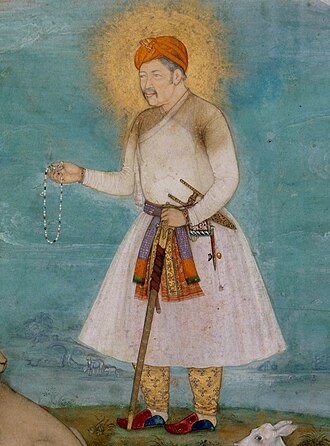
Fun Facts About Akbar the Great
- Akbar the Great never learned to read or write, yet he built a library of over 24,000 volumes in Sanskrit, Persian, Greek, Latin, Arabic and other languages.[1]
- Akbar called Ganges water the "water of immortality". When he was in Punjab, 200 miles away, it was sealed in large jars and transported to him.[1]
- Akbar reputedly kept thousands of hunting cheetahs during his reign and trained many of them himself.[1]
- The arguments of Jain scholars against eating meat persuaded Akbar to become a vegetarian.[1]
- Akbar established a library at Fatehpur Sikri exclusively for women.[1]
- Akbar built a "House of Worship" for debates among Muslims, Hindus, Jains, Jews, Jesuits and others, and had his scribes translate the New Testament.[1]
- Akbar the Great was alive at the same time as Nicolaus Copernicus — their lives overlapped for 1 year (1542–1543).[1][2][3][4]
- Akbar the Great lived to about 63, from 1542 until 1605.[1][2]
Akbar, also known as Akbar the Great, was the third Mughal emperor, who reigned from 1556 to 1605. Akbar succeeded his father, Humayun, under a regent, Bairam Khan, who helped the young emperor expand and consolidate Mughal domains in the Indian subcontinent. He is generally considered one of the greatest emperors in Indian history and led a successful campaign to unify the various kingdoms of Hindūstān or India proper.[1]
Read more on Wikipedia →Contemporaries
Their World
Questions About Akbar the Great
When was Akbar the Great born?
Akbar the Great was born in 1542 and died in 1605.
How old was Akbar the Great at death?
Akbar the Great died in 1605 at about 63 years old (1542–1605).
What was Akbar the Great known for?
Akbar the Great was known for: Mughal emperor who unified India. Akbar, also known as Akbar the Great, was the third Mughal emperor, who reigned from 1556 to 1605. Akbar succeeded his father, Humayun, under a regent, Bairam Khan, who helped the young emperor expand and consolidate Mughal domains in the Indian subcontinent. He is generally considered one of the greatest emperors in Indian history and led a successful campaign to unify the various kingdoms of Hindūstān or India proper.
Who was alive at the same time as Akbar the Great?
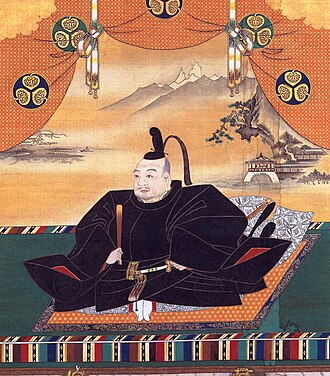
Akbar the Great's closest contemporary was Tokugawa Ieyasu. Their lives overlapped for 62 years.
Sources
- Akbar — Wikipedia. Text available under CC BY-SA 4.0
- Akbar the Great (Q8597) — Wikidata
- Nicolaus Copernicus — Wikipedia
- Nicolaus Copernicus (Q619) — Wikidata
- Portrait: Govardhan. Akbar With Lion and Calf ca. 1630, Metmuseum (cropped).jpg — Wikimedia Commons. Govardhan / Mir Ali Heravi, Public domain