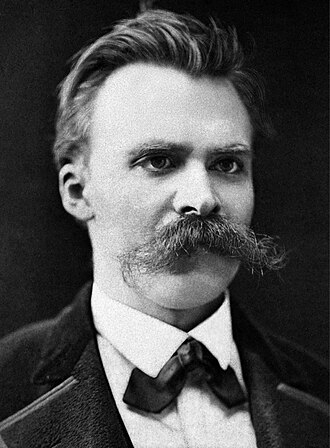
Fun Facts About Friedrich Nietzsche
- Friedrich Nietzsche gave up his Prussian citizenship and stayed officially stateless for the rest of his life, yet he still served with Prussian forces as a medical orderly.[1]
- Nietzsche became a professor at the University of Basel at 24 without having finished his doctorate, and he is still among the youngest tenured classics professors on record.[1]
- Nietzsche was an amateur composer. Richard Wagner reportedly mocked a piano piece Nietzsche sent to his wife Cosima as a birthday gift.[1][3][4]
- As his eyesight failed, Nietzsche tried writing on an early typewriter, the Hansen Writing Ball.[1]
- An often-repeated tale says Nietzsche's collapse in Turin came after he saw a horse being flogged, ran to it and threw his arms around its neck.[1]
- Nietzsche's sister Elisabeth helped found a "Germanic" colony in Paraguay, and after his death she edited his writings to fit her nationalist views, which he had opposed.[1]
- Friedrich Nietzsche was alive at the same time as Hokusai — their lives overlapped for 5 years (1844–1849).[1][2][5][6]
- Friedrich Nietzsche and Neil Armstrong died on the same day of the year, August 25.[1][2][7][8]
Friedrich Wilhelm Nietzsche was a German philosopher who started his career as a classical philologist and turned to philosophy early in his academic career. In 1869, aged 24, he was appointed Professor of Classical Philology at the University of Basel. Plagued by health problems for most of his life, he resigned from the university in 1879. He afterward lived as an independent writer, spending much of his life in relative solitude and financial insecurity while moving between Switzerland, Italy, and southern France in search of climates that might alleviate his condition, and in the following decade, he completed much of his core writing. In 1889, aged 44, he suffered a mental breakdown and thereafter a complete loss of his mental faculties, with paralysis and vascular dementia, living his remaining 11 years under the care of his family until his death. His works and his philosophy have fostered not only extensive scholarship but also much popular interest.[1]
Read more on Wikipedia →Contemporaries
Their World
Questions About Friedrich Nietzsche
When was Friedrich Nietzsche born?
Friedrich Nietzsche was born on October 15, 1844, and died on August 25, 1900.
How old was Friedrich Nietzsche at death?
Friedrich Nietzsche was born on October 15, 1844, and died on August 25, 1900, at age 55.
What was Friedrich Nietzsche known for?
Friedrich Nietzsche was known for: "God is dead," Beyond Good and Evil. Friedrich Wilhelm Nietzsche was a German philosopher who started his career as a classical philologist and turned to philosophy early in his academic career. In 1869, aged 24, he was appointed Professor of Classical Philology at the University of Basel. Plagued by health problems for most of his life, he resigned from the university in 1879. He afterward lived as an independent writer, spending much of his life in relative solitude and financial insecurity while moving between Switzerland, Italy, and southern France in search of climates that might alleviate his condition, and in the following decade, he completed much of his core writing. In 1889, aged 44, he suffered a mental breakdown and thereafter a complete loss of his mental faculties, with paralysis and vascular dementia, living his remaining 11 years under the care of his family until his death. His works and his philosophy have fostered not only extensive scholarship but also much popular interest.
Who was alive at the same time as Friedrich Nietzsche?
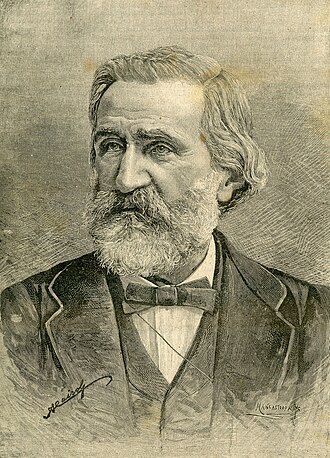
Friedrich Nietzsche's closest contemporary was Giuseppe Verdi. Their lives overlapped for 56 years.
Sources
- Friedrich Nietzsche — Wikipedia. Text available under CC BY-SA 4.0
- Friedrich Nietzsche (Q9358) — Wikidata
- Richard Wagner — Wikipedia
- Richard Wagner (Q1511) — Wikidata
- Hokusai — Wikipedia
- Hokusai (Q5586) — Wikidata
- Neil Armstrong — Wikipedia
- Neil Armstrong (Q1615) — Wikidata
- Portrait: Nietzsche187a.jpg — Wikimedia Commons. Friedrich Hermann Hartmann, Public domain