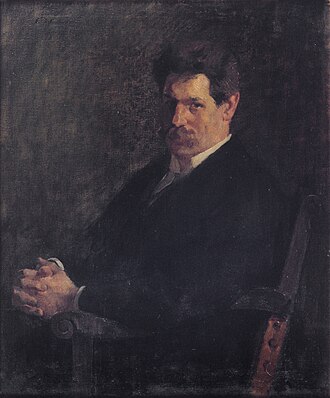
Fun Facts About Albert Schweitzer
- Albert Schweitzer was already a prominent organist when, at 30, he went back to university as a student to earn a medical degree, a subject he knew little about.[1]
- Schweitzer's cousin Anne-Marie Schweitzer Sartre was the mother of the philosopher Jean-Paul Sartre.[1][3][4]
- Schweitzer's medical dissertation was a psychiatric study of Jesus, in which he defended Jesus' mental health.[1]
- When he left for Lambaréné in 1913, Schweitzer was given a pedal piano built for the tropics, which was delivered by river in a huge dugout canoe.[1]
- As German citizens in a French colony during World War I, Schweitzer and his wife were put under French military supervision and later interned in France.[1]
- Schweitzer used his $33,000 Nobel Peace Prize money to start a leprosarium, and later campaigned against nuclear weapons with Albert Einstein.[1][5][6]
- Albert Schweitzer was alive at the same time as Kamala Harris — their lives overlapped for 1 year (1964–1965).[1][2][7][8]
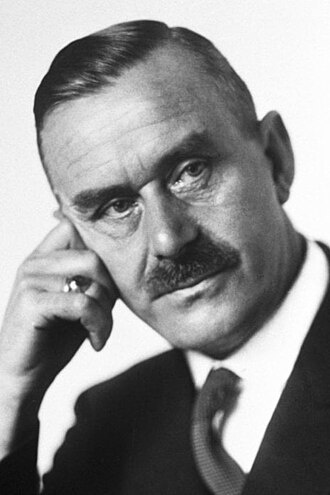
- Albert Schweitzer and Thomas Mann were both born in 1875.[1][2][9][10]
Ludwig Philipp Albert Schweitzer was a German polymath from Alsace. He was a theologian, organist, musicologist, writer, humanitarian, philosopher, and physician. As a Lutheran minister, Schweitzer challenged both the secular view of the historical Jesus as depicted by the historical-critical method current at this time, as well as the traditional Christian view. His contributions to the interpretation of Pauline Christianity concern the role of Paul's mysticism of "being in Christ" as primary and the doctrine of justification by faith as secondary.[1]
Read more on Wikipedia →Contemporaries
Their World
Questions About Albert Schweitzer
When was Albert Schweitzer born?
Albert Schweitzer was born on January 14, 1875, and died on September 4, 1965.
How old was Albert Schweitzer at death?
Albert Schweitzer was born on January 14, 1875, and died on September 4, 1965, at age 90.
What was Albert Schweitzer known for?
Albert Schweitzer was known for: Nobel Peace Prize physician, theologian and organist. Ludwig Philipp Albert Schweitzer was a German polymath from Alsace. He was a theologian, organist, musicologist, writer, humanitarian, philosopher, and physician. As a Lutheran minister, Schweitzer challenged both the secular view of the historical Jesus as depicted by the historical-critical method current at this time, as well as the traditional Christian view. His contributions to the interpretation of Pauline Christianity concern the role of Paul's mysticism of "being in Christ" as primary and the doctrine of justification by faith as secondary.
Who was alive at the same time as Albert Schweitzer?
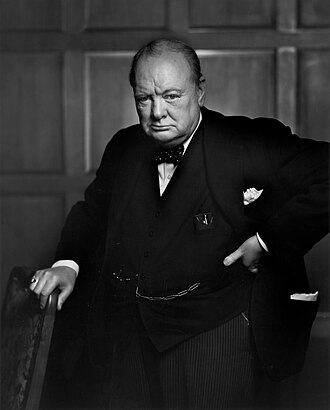
Albert Schweitzer's closest contemporary was Winston Churchill. Their lives overlapped for 90 years.
Sources
- Albert Schweitzer — Wikipedia. Text available under CC BY-SA 4.0
- Albert Schweitzer (Q49325) — Wikidata
- Jean-Paul Sartre — Wikipedia
- Jean-Paul Sartre (Q9364) — Wikidata
- Albert Einstein — Wikipedia
- Albert Einstein (Q937) — Wikidata
- Kamala Harris — Wikipedia
- Kamala Harris (Q10853588) — Wikidata
- Thomas Mann — Wikipedia
- Thomas Mann (Q37030) — Wikidata
- Portrait: Émile Schneider, Portrait d'Albert Schweitzer.jpg — Wikimedia Commons. Émile Schneider, Public domain