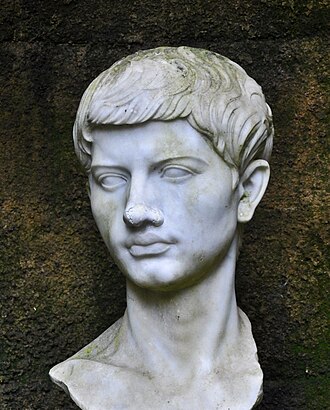
Fun Facts About Virgil
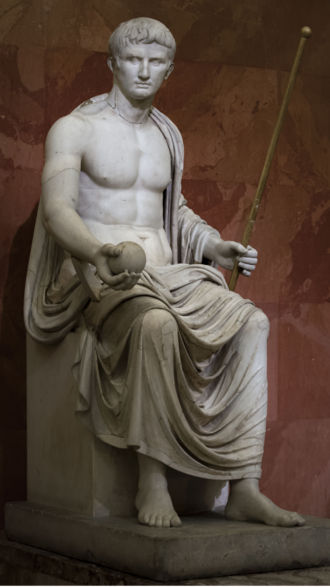
- Virgil wanted the Aeneid burned when he died. Emperor Augustus overruled him and ordered the epic published with as few changes as possible.[1][3][4]
- Virgil was so shy and reserved that his schoolmates nicknamed him Parthenias, meaning virgin.[1]
- From as early as the 2nd century AD into the Middle Ages, Virgil's poems were used for fortune-telling. In the Sortes Vergilianae, a random passage was read as the answer to a question.[1]
- Christian thinkers read Virgil's Fourth Eclogue, about the birth of a boy who brings a golden age, as a prediction of the birth of Jesus.[1]
- "Mantua gave me life, the Calabrians took it away, Naples holds me now," reads the epitaph Virgil composed for his own tomb in Naples.[1]
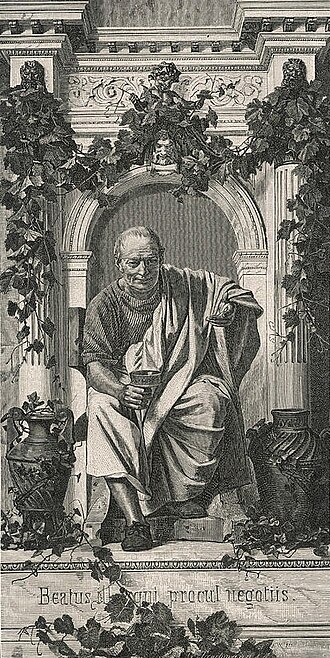
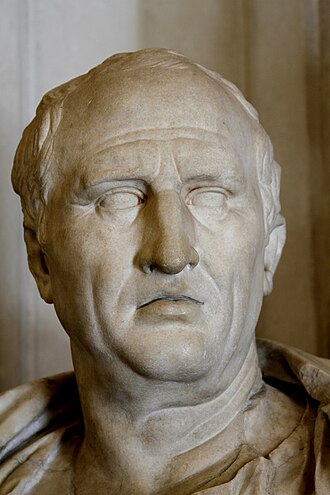
- Virgil was alive at the same time as Cicero — their lives overlapped for 27 years (70 BCE–43 BCE).[1][2][5][6]
- Virgil lived to about 51, from 70 BCE until 19 BCE.[1][2]
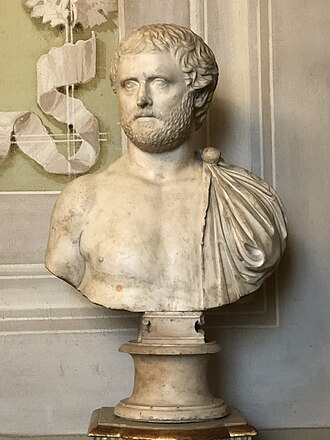
- Virgil was alive at the same time as Ovid — their lives overlapped for 24 years (43 BCE–19 BCE).[1][2][7][8]
Publius Vergilius Maro, usually called Virgil or Vergil in English, was an ancient Roman poet of the Augustan period. He composed three of the most famous poems in Latin literature: the Eclogues, the Georgics, and the epic Aeneid. Some minor poems, collected in the Appendix Vergiliana, were attributed to him in ancient times, but modern scholars regard these as spurious, with the possible exception of some short pieces.[1]
Read more on Wikipedia →Contemporaries
Questions About Virgil
When was Virgil born?
Virgil was born in 70 BCE and died in 19 BCE.
How old was Virgil at death?
Virgil died in 19 BCE at about 51 years old (70 BCE–19 BCE).
What was Virgil known for?
Virgil was known for: Author of the Aeneid, Rome's greatest poet. Publius Vergilius Maro, usually called Virgil or Vergil in English, was an ancient Roman poet of the Augustan period. He composed three of the most famous poems in Latin literature: the Eclogues, the Georgics, and the epic Aeneid. Some minor poems, collected in the Appendix Vergiliana, were attributed to him in ancient times, but modern scholars regard these as spurious, with the possible exception of some short pieces.
Who was alive at the same time as Virgil?
Virgil's closest contemporary was Horace. Their lives overlapped for 46 years.
Sources
- Virgil — Wikipedia. Text available under CC BY-SA 4.0
- Virgil (Q1398) — Wikidata
- Augustus — Wikipedia
- Augustus (Q1405) — Wikidata
- Cicero — Wikipedia
- Cicero (Q1541) — Wikidata
- Ovid — Wikipedia
- Ovid (Q7198) — Wikidata
- Portrait: Parco della Grotta di Posillipo5 (crop).jpg — Wikimedia Commons. Armando Mancini, Public domain