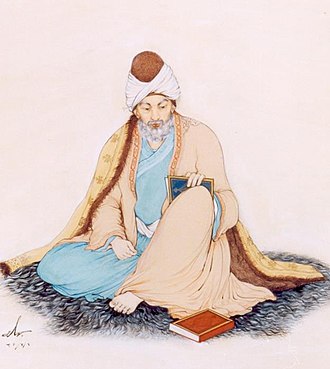
Fun Facts About Rumi
- Rumi, the Persian Sufi mystic and poet, has become the best-selling poet in the United States in recent years.[1]
- The name Rumi means "the Roman": he settled in Konya, which until recently had been a province of the Eastern Roman Empire.[1]
- One night in 1248, Rumi's companion Shams of Tabriz was called to the back door and never seen again. Rumi's grief poured out in a flood of lyric poems.[1]
- When his student Hussam proposed a new book of poetry, Rumi took out a paper with the opening 18 lines of the Masnavi already written. He spent 12 years dictating the rest.[1]
- Local Christians and Jews joined the crowd that bid farewell to Rumi as his body was carried through Konya.[1]
- Rumi wrote in his mother tongue, Persian, but his great Divan also contains Arabic poems and 14 couplets in Greek.[1]
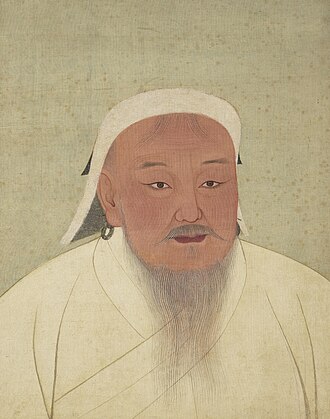
- Rumi was born just 20 years before Genghis Khan died.[1][2][3][4]
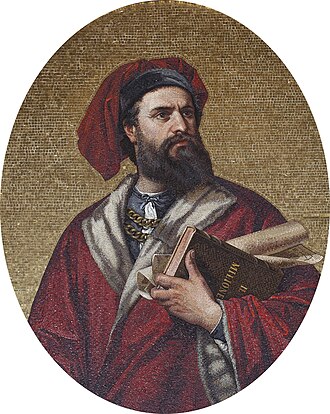
- Rumi was alive at the same time as Marco Polo — their lives overlapped for 19 years (1254–1273).[1][2][5][6]
Jalāl al-Dīn Muḥammad Rūmī, commonly known as Rumi, was a Sufi mystic, poet, and founder of the Islamic brotherhood known as the Mevlevi Order. His family hailed from Balkh. Rumi is an influential figure in Sufism, and his thought and works loom large both in Persian literature and mystic poetry in general. Today, his translated works are enjoyed all over the world.[1]
Read more on Wikipedia →Contemporaries
Their World
Questions About Rumi
When was Rumi born?
Rumi was born on September 30, 1207, and died on December 17, 1273.
How old was Rumi at death?
Rumi was born on September 30, 1207, and died on December 17, 1273, at age 66.
What was Rumi known for?
Rumi was known for: Persian poet, Sufi mystic. Jalāl al-Dīn Muḥammad Rūmī, commonly known as Rumi, was a Sufi mystic, poet, and founder of the Islamic brotherhood known as the Mevlevi Order. His family hailed from Balkh. Rumi is an influential figure in Sufism, and his thought and works loom large both in Persian literature and mystic poetry in general. Today, his translated works are enjoyed all over the world.
Who was alive at the same time as Rumi?
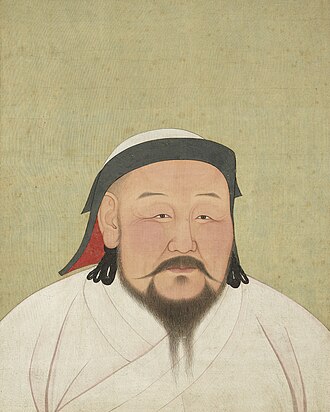
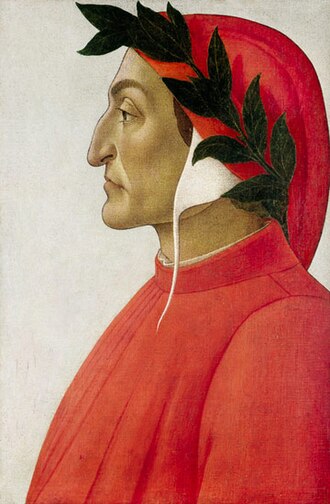
Rumi's closest contemporary was Kublai Khan. Their lives overlapped for 58 years.
Sources
- Rumi — Wikipedia. Text available under CC BY-SA 4.0
- Rumi (Q43347) — Wikidata
- Genghis Khan — Wikipedia
- Genghis Khan (Q720) — Wikidata
- Marco Polo — Wikipedia
- Marco Polo (Q6101) — Wikidata
- Portrait: مولانا اثر حسین بهزاد (cropped).jpg — Wikimedia Commons. Hossein Behzad, Public domain