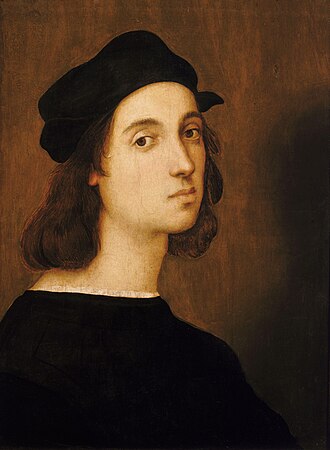
Fun Facts About Raphael
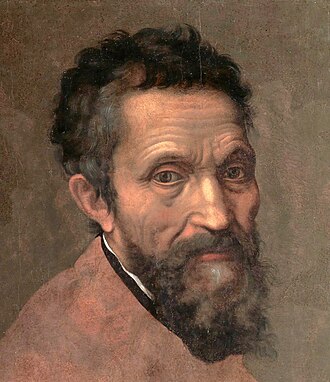
- Raphael painted his rival Michelangelo into The School of Athens as Heraclitus. Michelangelo accused him of plagiarism and later grumbled that "everything he knew about art he got from me".[1][3][4]
- According to Vasari, Raphael was born and died on a Good Friday, and his death came from exhaustion caused by unceasing romantic affairs. Later historians suggest infection and bloodletting.[1]
- At his own request, Raphael was buried in the Pantheon. His epitaph says Nature feared to be conquered by him while he lived.[1]
- Raphael was also Rome's guardian of antiquities: from 1515, anyone digging up ancient remains had to inform him within three days.[1]
- According to Vasari, Raphael had a workshop of fifty pupils and assistants, arguably the largest team assembled under any single old master painter.[1]
- Raphael was a leading architect too: after Bramante died in 1514, he was named architect of the new St Peter's Basilica.[1]
- Raphael was alive at the same time as Christopher Columbus — their lives overlapped for 23 years (1483–1506).[1][2][5][6]
- Raphael shares a birthday with Rafael Correa: both were born on April 6.[1][2][7][8]
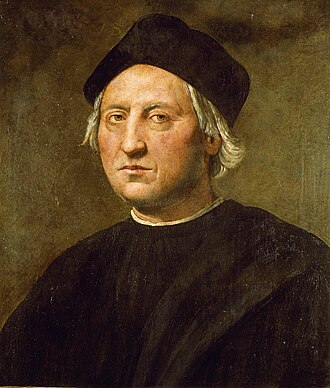
Raffaello Sanzio da Urbino, now generally known in English as Raphael, was an Italian painter and architect of the High Renaissance. His work is admired for its clarity of form, ease of composition, and visual achievement of the Neoplatonic ideal of human grandeur. Together with Leonardo da Vinci and Michelangelo, he forms the traditional trinity of great masters of that period.[1]
Read more on Wikipedia →Contemporaries
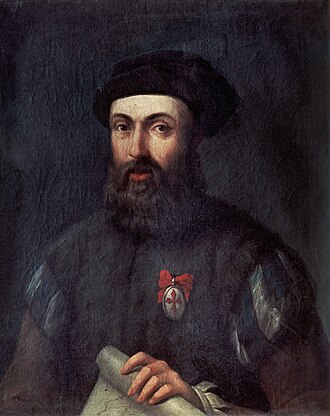
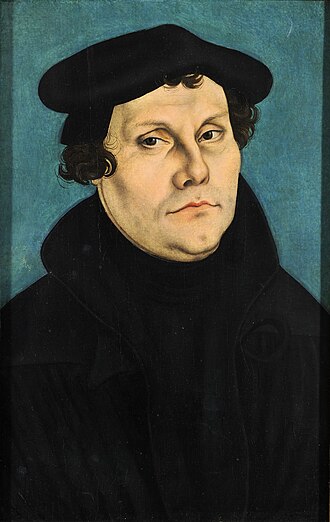
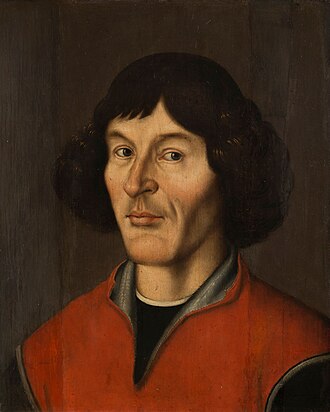
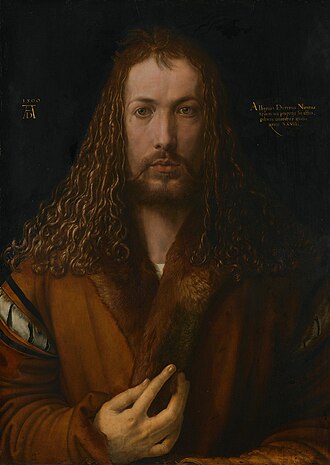
Their World
Questions About Raphael
When was Raphael born?
Raphael was born on April 6, 1483, and died on April 6, 1520.
How old was Raphael at death?
Raphael was born on April 6, 1483, and died on April 6, 1520, at age 37.
What was Raphael known for?
Raphael was known for: School of Athens, Renaissance master. Raffaello Sanzio da Urbino, now generally known in English as Raphael, was an Italian painter and architect of the High Renaissance. His work is admired for its clarity of form, ease of composition, and visual achievement of the Neoplatonic ideal of human grandeur. Together with Leonardo da Vinci and Michelangelo, he forms the traditional trinity of great masters of that period.
Who was alive at the same time as Raphael?
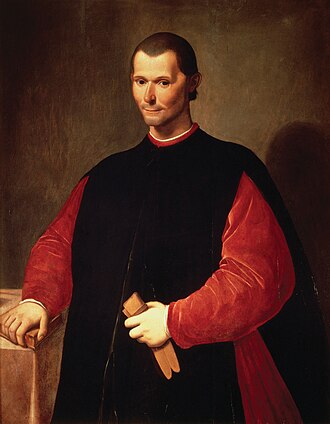
Raphael's closest contemporary was Niccolò Machiavelli. Their lives overlapped for 37 years.
Sources
- Raphael — Wikipedia. Text available under CC BY-SA 4.0
- Raphael (Q5597) — Wikidata
- Michelangelo — Wikipedia
- Michelangelo (Q5592) — Wikidata
- Christopher Columbus — Wikipedia
- Christopher Columbus (Q7322) — Wikidata
- Rafael Correa — Wikipedia
- Rafael Correa (Q19581) — Wikidata
- Portrait: Raffaello Sanzio.jpg — Wikimedia Commons. Raphael, Public domain